Manatees can move through Sarasota-area bays, canals, estuaries, and coastal water throughout the year, but their location changes with water temperature. In warmer months they are more widely dispersed through Florida waterways. When water temperatures fall to around 68 degrees Fahrenheit, they seek warmer refuges. That means there is no single guaranteed “manatee season” for every Sarasota boat trip.
For visitors, the practical answer is simple: enjoy a private cruise as a complete Sarasota Bay experience and treat any manatee sighting as a special wild encounter. A local captain can watch likely areas and current conditions, but no responsible tour should promise that a manatee will appear on a particular day.
How Season Changes Manatee Movement
Florida manatees need warm water. The Florida Fish and Wildlife Conservation Commission explains that they cannot tolerate prolonged exposure to water below about 68 degrees. During cold periods, they move toward springs and other dependable warm-water sites. During warm weather, they spread through rivers, bays, estuaries, and coastal areas to travel and feed.
Sarasota County waters have areas where manatees live or pass through regularly or periodically. Their movements still depend on temperature, food, tides, and other natural conditions. One week may bring frequent activity in a bay or canal, while another may be quiet.
This is why “best time” can mean two different things. Winter can concentrate manatees near warm-water habitat, but those gathering sites are not necessarily on a standard Sarasota Bay cruise route. Warmer months can bring manatees into a wider range of local waterways, but they are more dispersed and may be harder to locate.
What You May Notice From the Boat
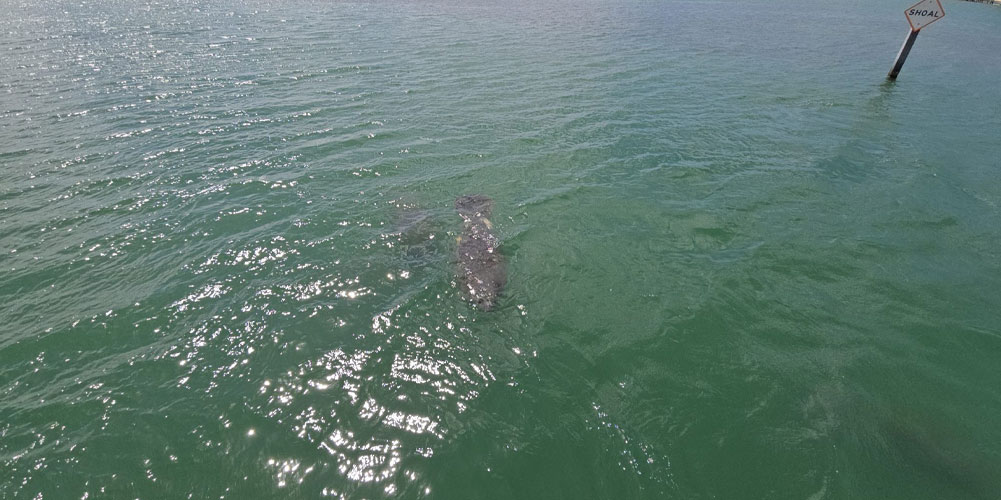
Manatees often create subtle signs. Instead of expecting a dramatic leap, watch for:
- A rounded back or nose breaking the surface
- Circular ripples where an animal has just breathed
- A slow-moving shape beneath clear water
- A broad paddle-shaped tail
- Calm activity near seagrass or quieter shoreline areas
Patience matters. Manatees surface to breathe but may spend time below the water. The captain may slow the boat or point out a shape that is easy to miss. Polarized sunglasses can reduce glare and make it easier to see into the water.
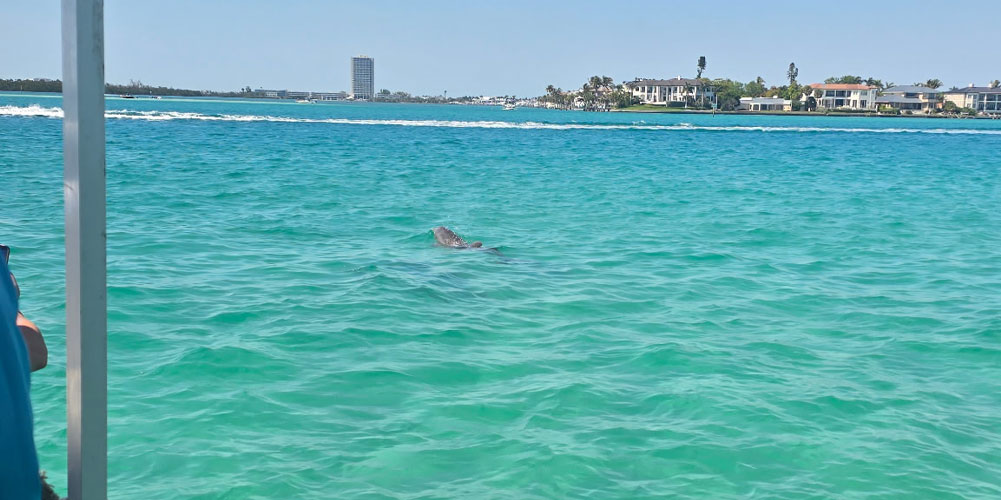
Siesta Funship’s Dolphin & Sandbar Cruise lists both dolphins and manatees among the wildlife guests might see. The word “might” is important. The charter offers wildlife watching as part of a broader private experience, not as a guaranteed animal encounter.
Why Sarasota Bay Supports Manatees
Manatees use a variety of freshwater and saltwater habitats, including rivers, bays, canals, estuaries, and coastal areas. Sarasota Bay’s connected shallow-water habitats and seagrass resources make the region suitable for marine life.
The Sarasota Bay Estuary Program notes that dolphins and manatees live in and around the bay. The region also supports coastal birds, fish, and other animals. A sightseeing trip may include several kinds of wildlife even when a manatee stays out of view.
That variety is one reason to plan the outing around the bay itself. The private Sarasota boat charter gives guests time to enjoy scenery, open water, sandbars, and coastal life rather than measuring the day by one sighting.
Responsible Manatee Watching
Manatees are protected wildlife. A respectful encounter lets them choose their path and behavior. Guests should never chase, feed, touch, surround, or attempt to ride a manatee. Do not enter the water to pursue one or block its access to open water.
- The captain controls the boat, but passengers also have a role:
- Listen when the captain asks the group to stay quiet or remain in place.
- Keep hands, food, and objects out of the water near wildlife.
- Use a camera zoom instead of trying to move closer.
- Avoid sudden shouting or splashing around an animal.
- Never treat a sighting as permission to swim toward it.
Responsible viewing protects the animal’s energy for feeding, traveling, resting, and reaching warm water when needed. It also keeps the experience safe for guests.
What Else to See on a Sarasota Wildlife Cruise
A manatee may be the goal, but the bay can offer much more. Guests may see bottlenose dolphins, pelicans, herons, egrets, ospreys, fish, and changing coastal scenery. Mangrove-lined areas, waterfront homes, shallow flats, and open views all add interest to the route.
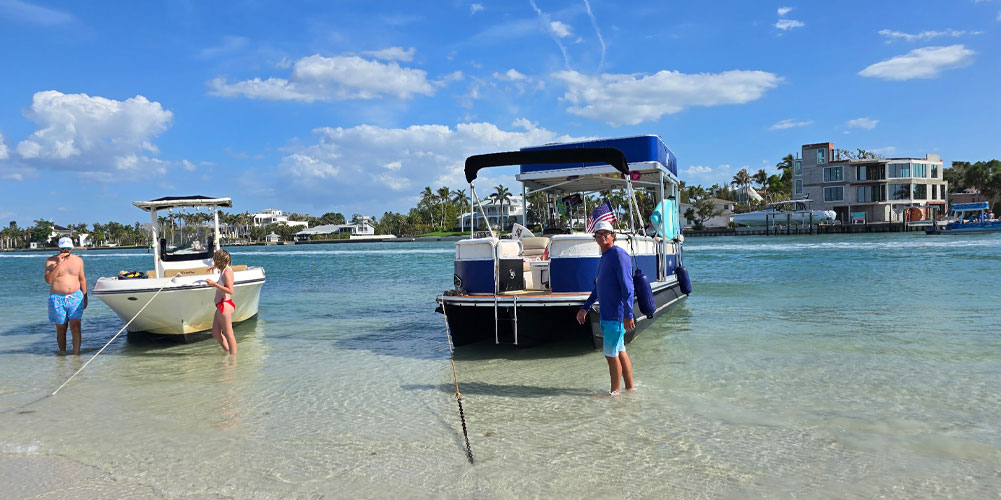
Review the Siesta Funship gallery for real examples from client outings. It includes wildlife, sandbar stops, sunsets, families, and the Funship itself. The images show what is possible while leaving room for each trip to be different.
Pair Wildlife Watching With a Sandbar Stop
A private charter does not need to spend every minute searching. Pairing wildlife watching with a sandbar stop keeps the day enjoyable for everyone. Guests can swim, use the large floating mat, paddleboard, play music, or relax in shaded seating.
This balance is especially helpful for families. Children may enjoy looking for wildlife for a while and then be ready to move. Adults can appreciate a quiet cruise before settling into the shallow water. The boat’s 10-foot slide, floats, and water toys give the group several ways to use the stop.
For a trip built around your own mix of activities, the custom Funship rental can combine wildlife cruising with sandbars, shelling, snorkeling, scenic riding, or waterfront stops.
How to Improve Your Wildlife-Watching Experience
You cannot control where a wild animal goes, but you can arrive prepared:
- Choose a trip length that leaves time for cruising without rushing.
- Wear polarized sunglasses to reduce glare.
- Keep a camera ready with zoom enabled.
- Bring sunscreen, a hat, and water.
- Ask the captain what wildlife has been active recently.
- Stay flexible if weather or water conditions change the route.
- Enjoy birds, scenery, and the cruise even between sightings.
A three- or four-hour charter generally provides more flexibility than a very short trip, but extra time is still not a guarantee. Choose the duration based on your group’s full wish list, not solely on the hope of seeing one animal.
Frequently Asked Questions
Manatees use Sarasota-area waters year-round, but their distribution changes with water temperature and other conditions. Sightings are possible in different seasons and never guaranteed.
Cold weather causes manatees to gather around dependable warm-water refuges. Those locations may not match a normal Sarasota Bay route. In warmer weather, manatees disperse through more waterways, creating different opportunities.
No ethical wildlife trip can guarantee a wild manatee. Siesta Funship offers private Sarasota Bay charters where manatees are one of several animals guests might see.
Guests should not pursue, touch, feed, or interfere with manatees. Observe from a respectful distance and follow the captain’s instructions.
Bring sunscreen, sunglasses, a hat, water, towels if your trip includes swimming, and a camera or phone with zoom. A small dry bag can protect valuables.
Explore Sarasota Bay With a Local Captain
The best manatee experience begins with realistic expectations. These animals move on their own schedule, and that freedom is what makes seeing one memorable. A private charter gives your group the space to watch responsibly while enjoying dolphins, birds, coastal views, and sandbar time along the way.
Contact Siesta Funship to plan a private Sarasota Bay outing.